> For the complete documentation index, see [llms.txt](https://wiki.beabee.io/community-journalismus/llms.txt). Markdown versions of documentation pages are available by appending `.md` to page URLs; this page is available as [Markdown](https://wiki.beabee.io/community-journalismus/english/community-centred-methods/how-to-build-a-join-page.md).
# How to Build a Join Page
The goal of a community organization is to give potential members the feeling that they can get involved – whether through contributing content or providing financial support. As a member of a community-centered media project, it’s not just about passively consuming content, but about **actively participating**: by sharing expertise, networks, feedback, or financial contributions. This sense of involvement should be tangible from the **very first point of contact** with your organisation – and that is often your website.
That’s why it’s crucial to actively **invite interested people** to get involved and become part of your community. What this **participation** or your call to action looks like in practice depends on your outlet. It might, for example, be a financial contribution, providing editorial feedback, or registering for a members’ area.
No matter which method of participation you choose, your website should be designed to direct interested visitors to a **join page** – a page that is clearly focused on encouraging users to sign up and join your community.
**A join page should include the following elements:**
* **A short explanation of the benefits:**\
What happens in this community and what values does it stand for? Why should I join? What value do I get as a member?
* **A clear call to action:**\
For example, “Sign up now,” “Join now,” or “Become a member.”
* **A sign-up form (optionally including a payment option)**
* **A note about data protection / privacy**
To create the join page that works best for you, it’s worth first taking a look at how others do it. It’s important not only to consider the design of the page itself, but also the path leading to it. Where is the page linked? Are there banners or pop-ups drawing attention to a potential membership? Review different examples, think about what you find effective or less successful, and use these insights to develop your own version.
***
## Examples of Join Pages
#### **1) The Bristol Cable**
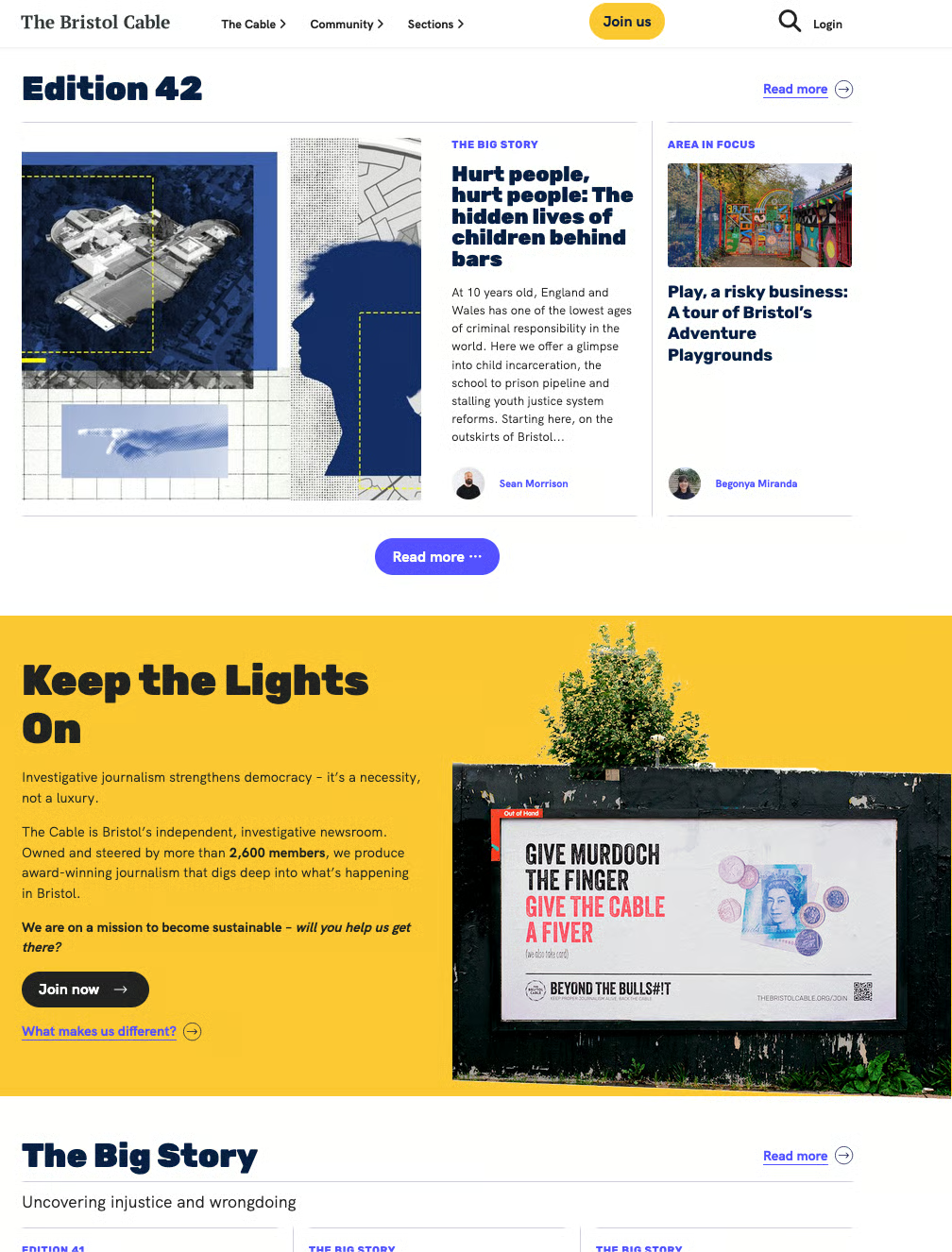
The Bristol Cable places the membership notice quite subtly on the homepage: in the top right corner with the call to action “Join us” and additionally via a banner further down. The banner already makes it clear what The Bristol Cable is all about and why individual supporters are so important.
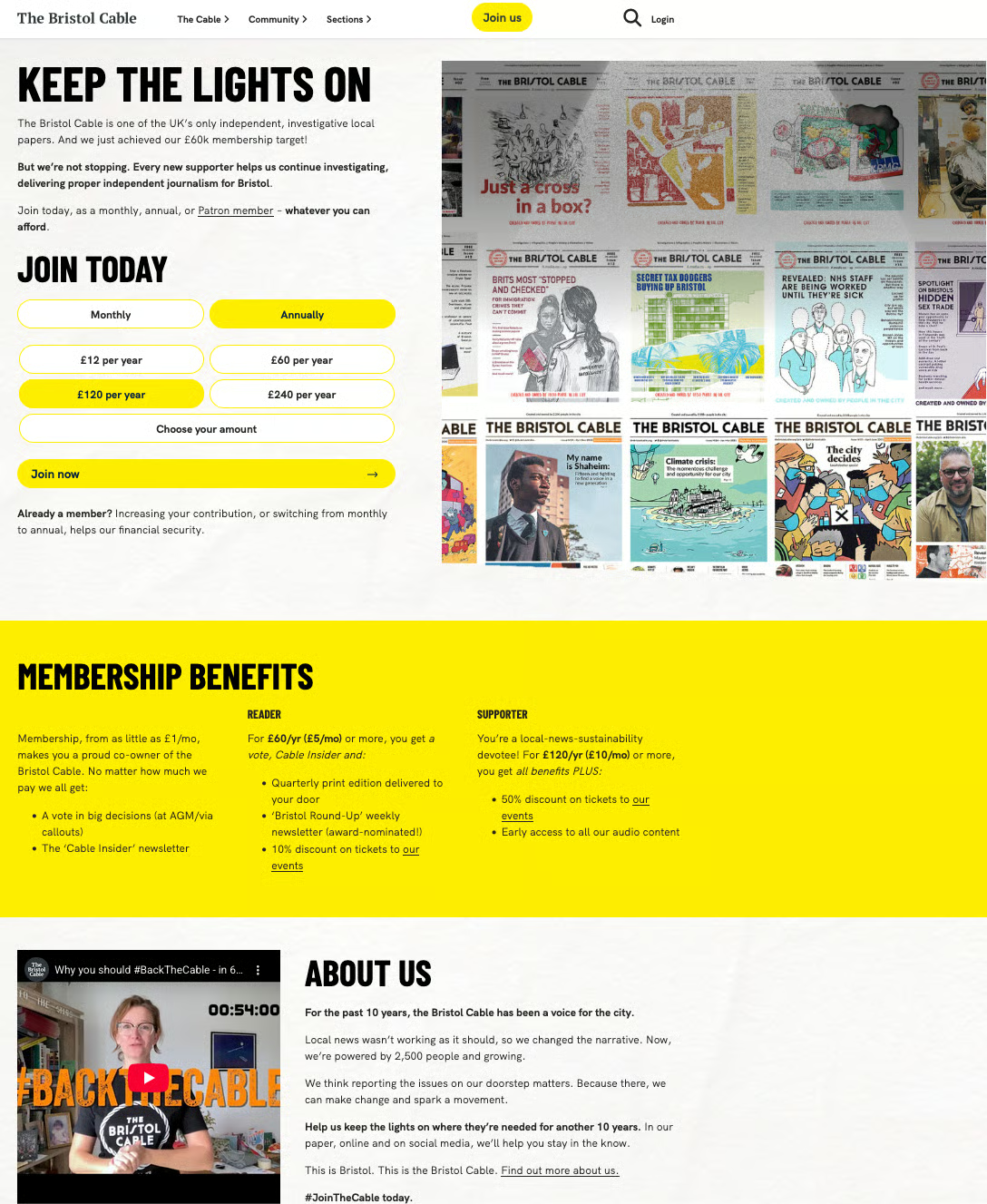
Clicking the buttons takes you directly to the actual join page, where the membership can be completed. There, the different membership options are presented, the respective benefits are explained, and the prices are shown transparently. There is also a video introducing The Bristol Cable, as well as a FAQ addressing common questions about payments and the use of funds.
[Learn more](https://thebristolcable.org/join/)
***
#### **2) CORRECTIV**
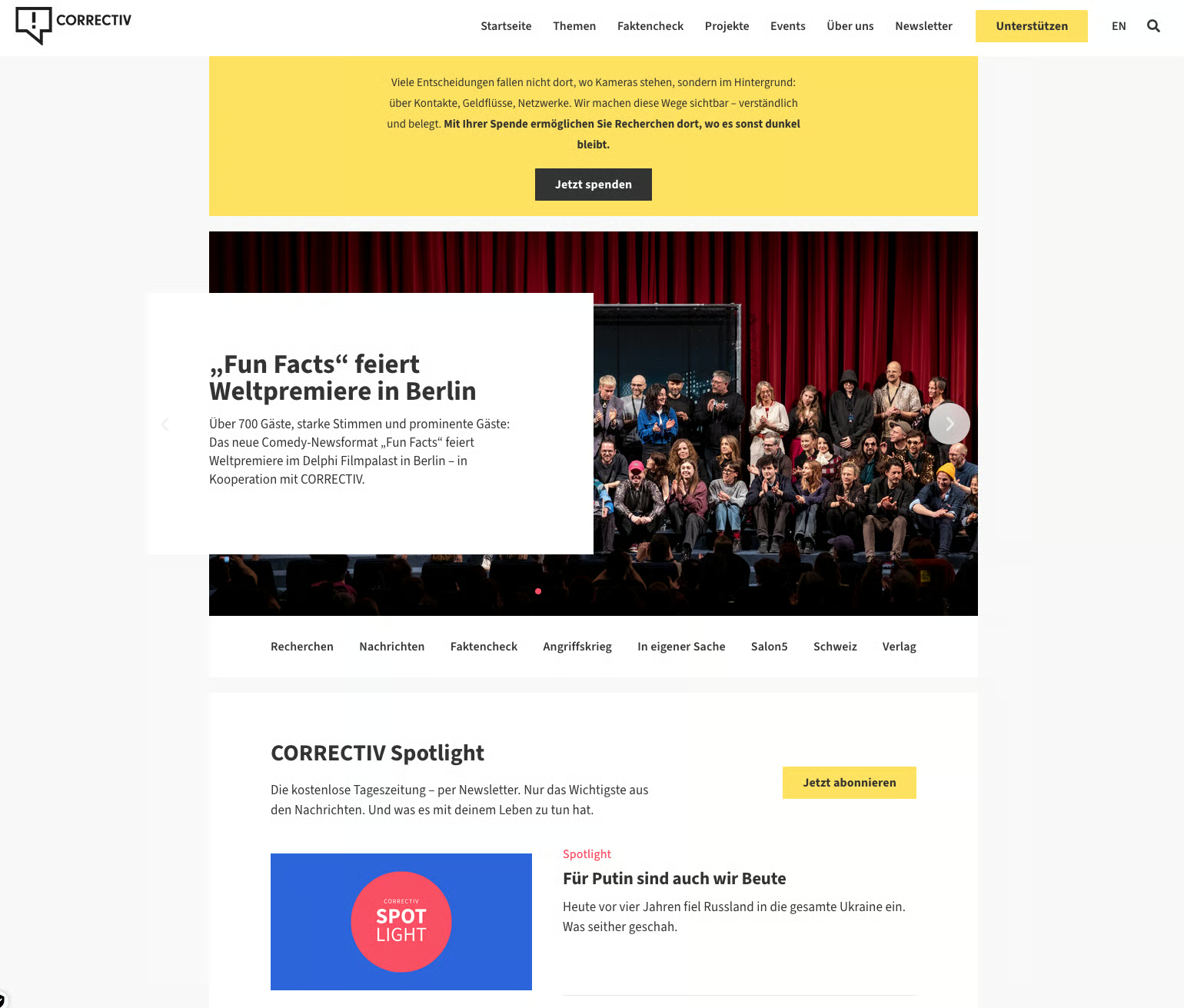
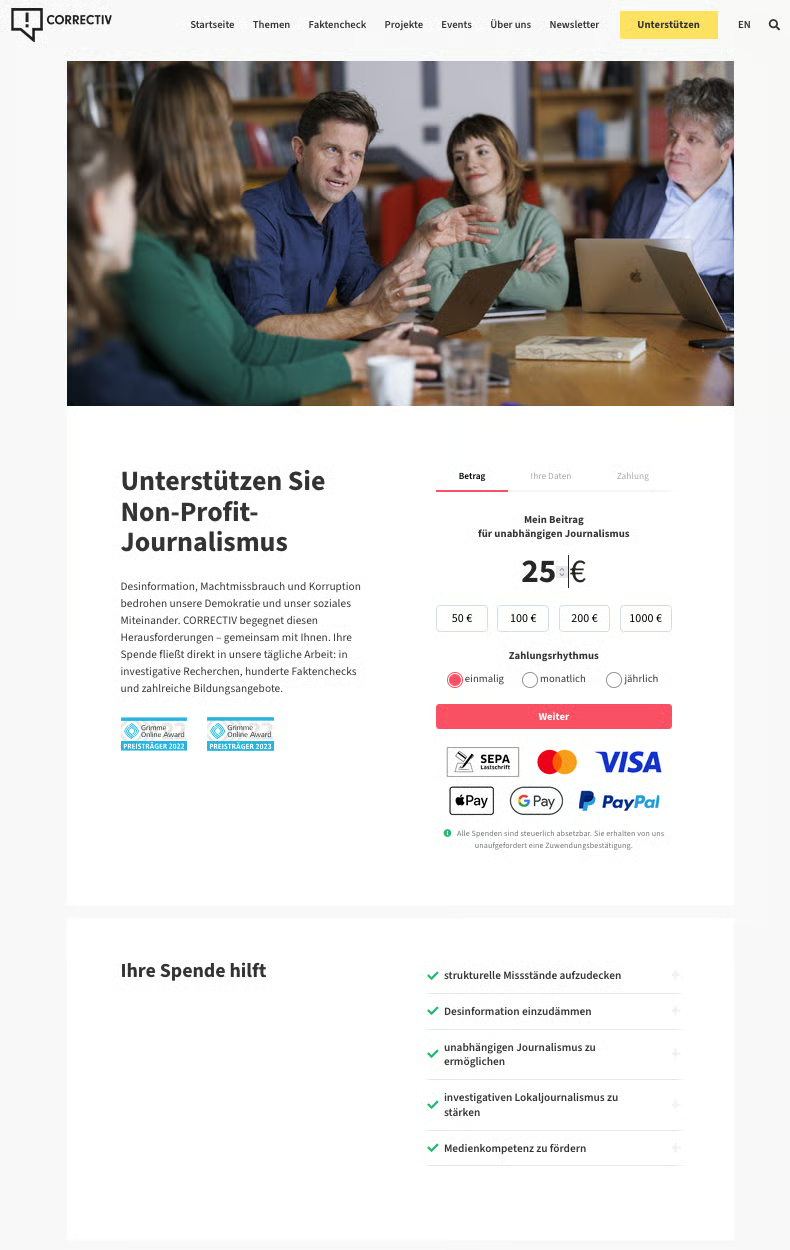
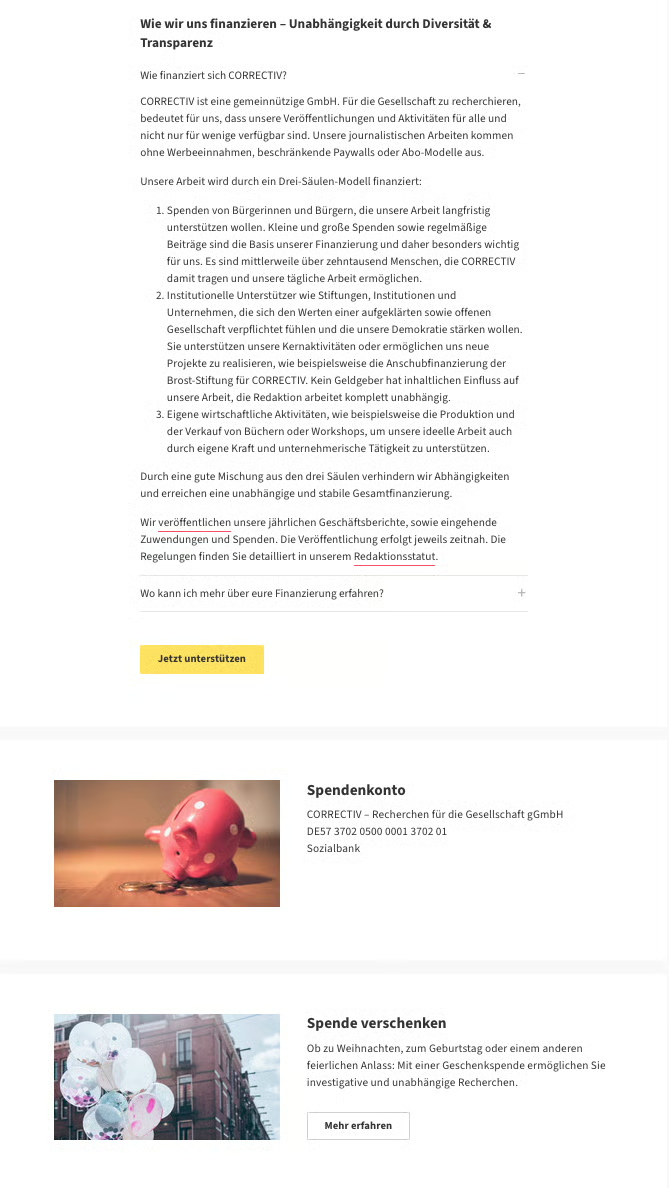
CORRECTIV does not offer memberships or subscriptions, but is funded through donations. The donation appeal appears right at the top of the homepage as a banner and additionally in the menu bar. There are also occasional pop-ups on different pages. Clicking the “Donate now” button leads to the join page, where a payment option is provided and it is explained what impact a donation can have. The donation amount can be freely chosen and is not tied to membership packages.
Further down, there is a detailed FAQ on payment processes, CORRECTIV itself, and the media outlet’s funding. There is also the option to donate as a company or to give a donation as a gift – an offering commonly found at other media outlets as well.
[Learn more](https://correctiv.org/unterstuetzen/)
***
#### **3) karla Magazine**
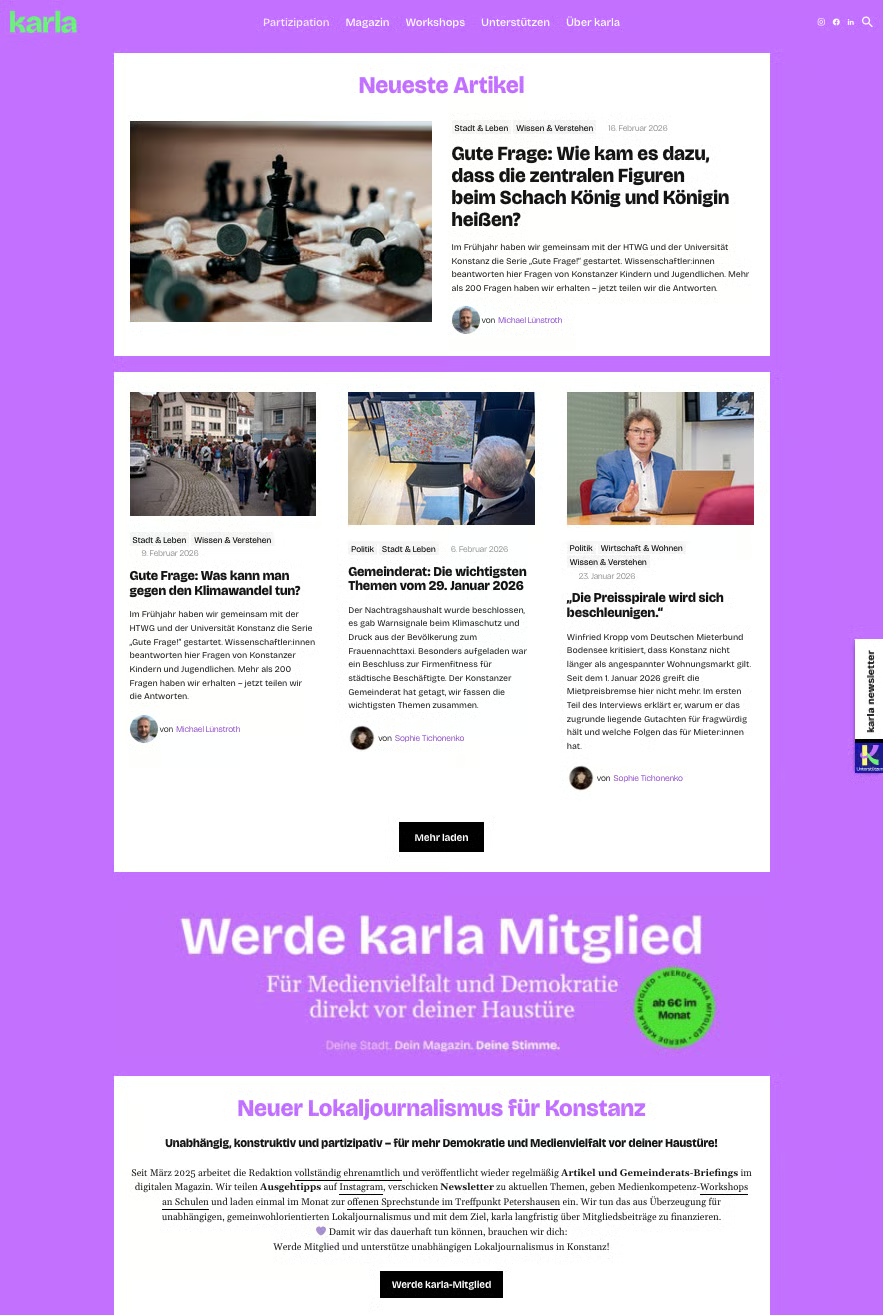
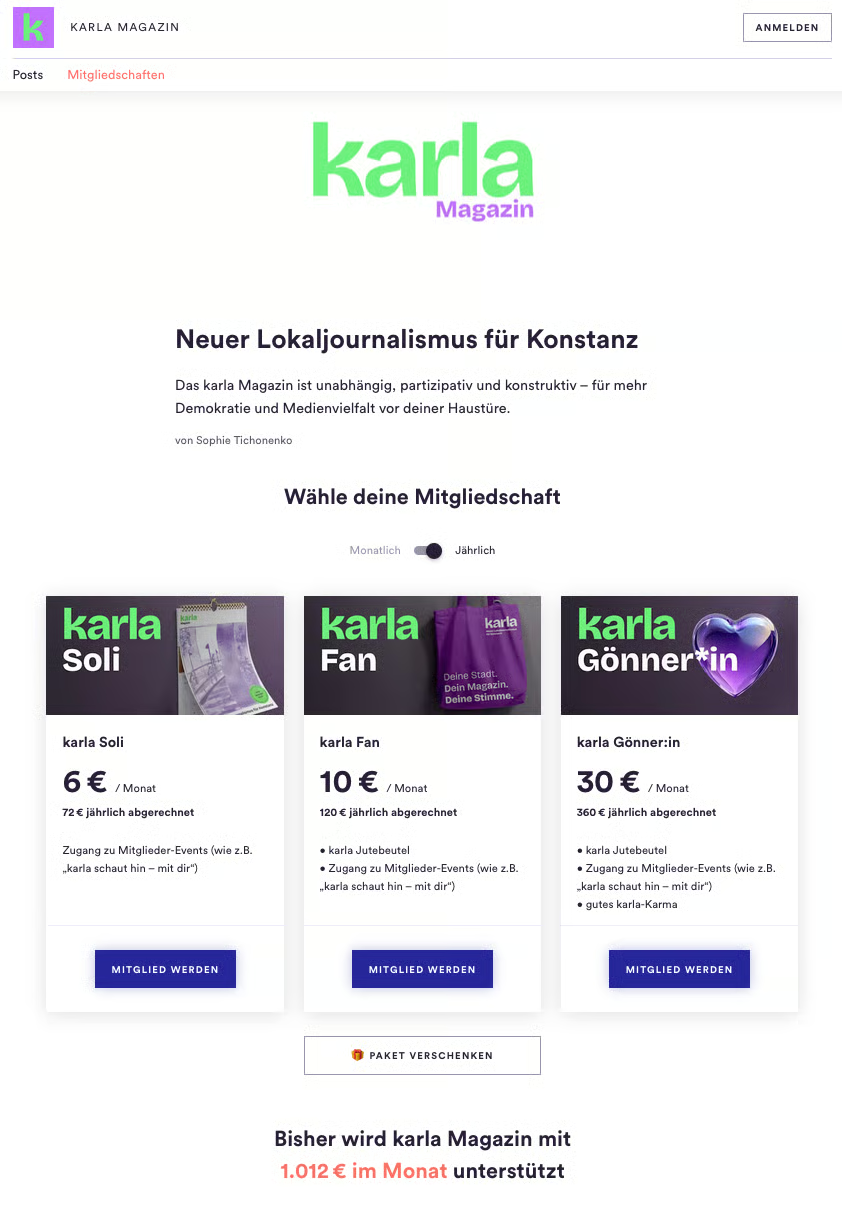
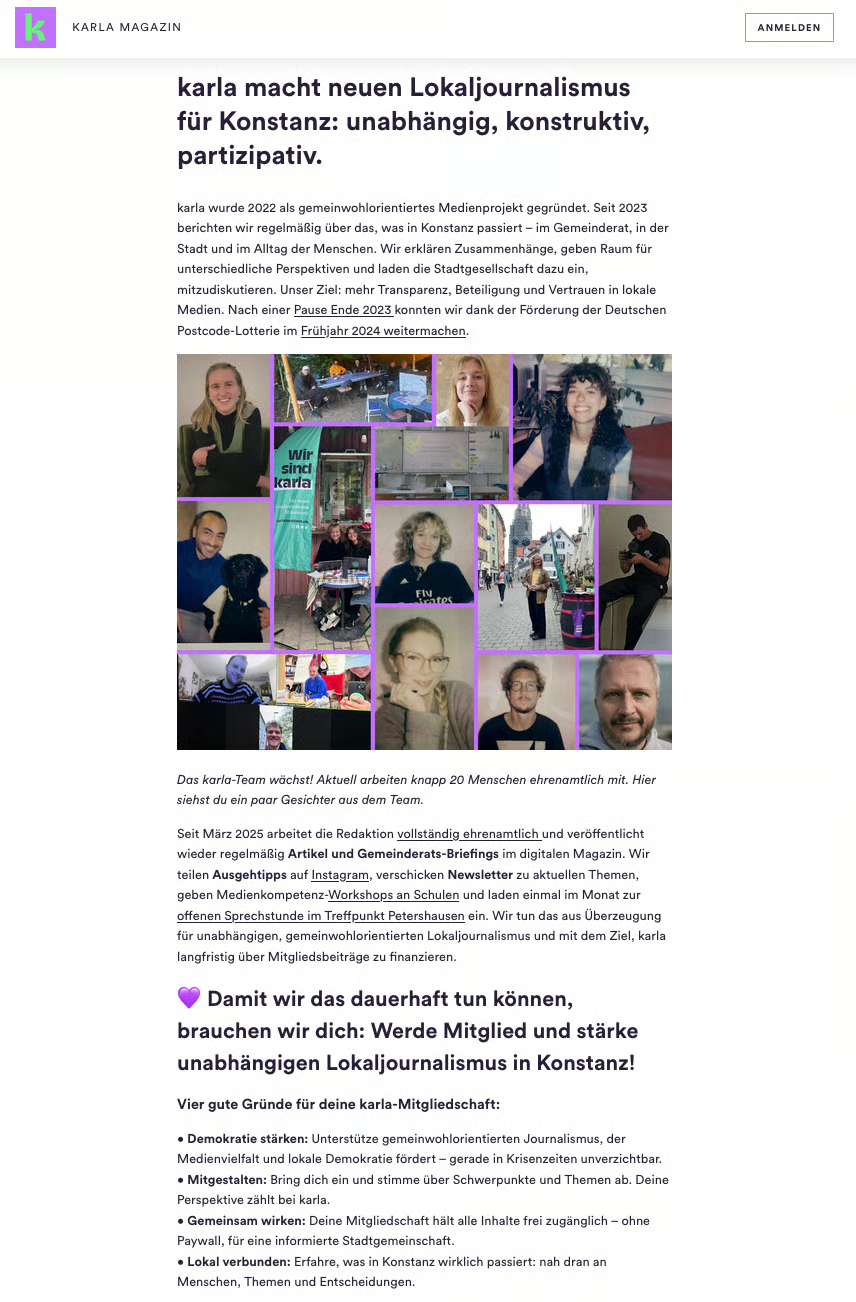
karla places the membership appeal both in a banner on the homepage and under the “Support” tab in the menu bar. The actual join page is implemented via Steady and displays the different membership options, their respective costs, and the benefits. At karla, the contribution amount cannot be freely chosen; instead, various packages are offered. Below this, karla’s mission and the reasons for becoming a member are explained in more detail. Images of the karla team further create a personal atmosphere.
[Learn more](https://steady.page/de/karla-magazin/about)
***
#### **4) Fumaça**
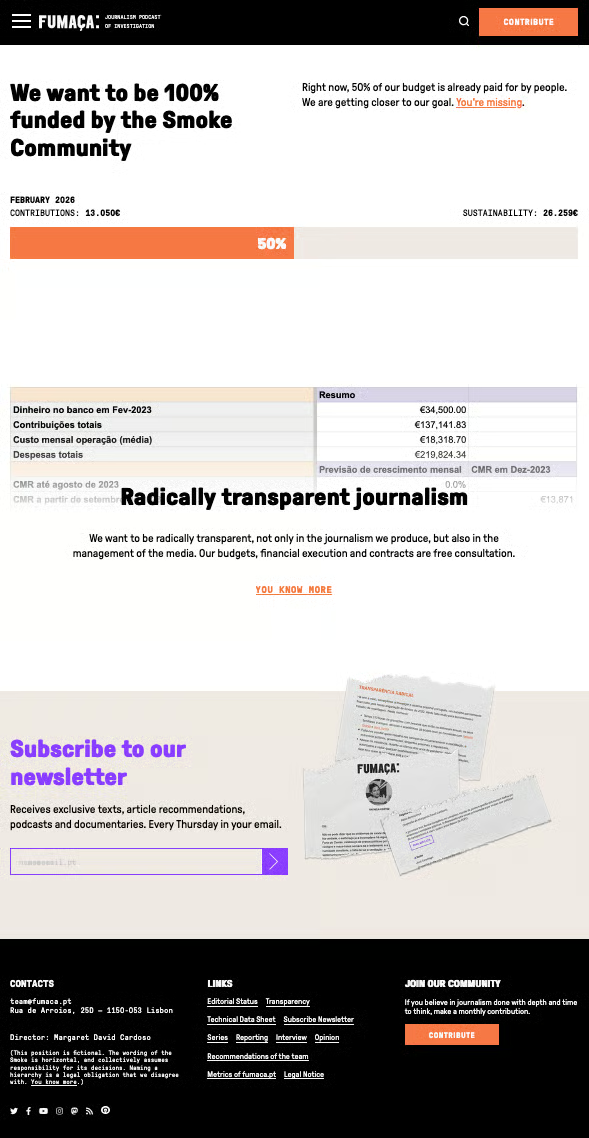
Fumaça places the membership notice—besides in the menu bar and footer—quite far down on the homepage. What’s notable is that Fumaça places great emphasis on transparency, making a lot of financial data publicly accessible. At the same time, the goal of being 100% funded by memberships is strongly highlighted. To illustrate this, the outlet uses a custom-built progress bar that is updated regularly.
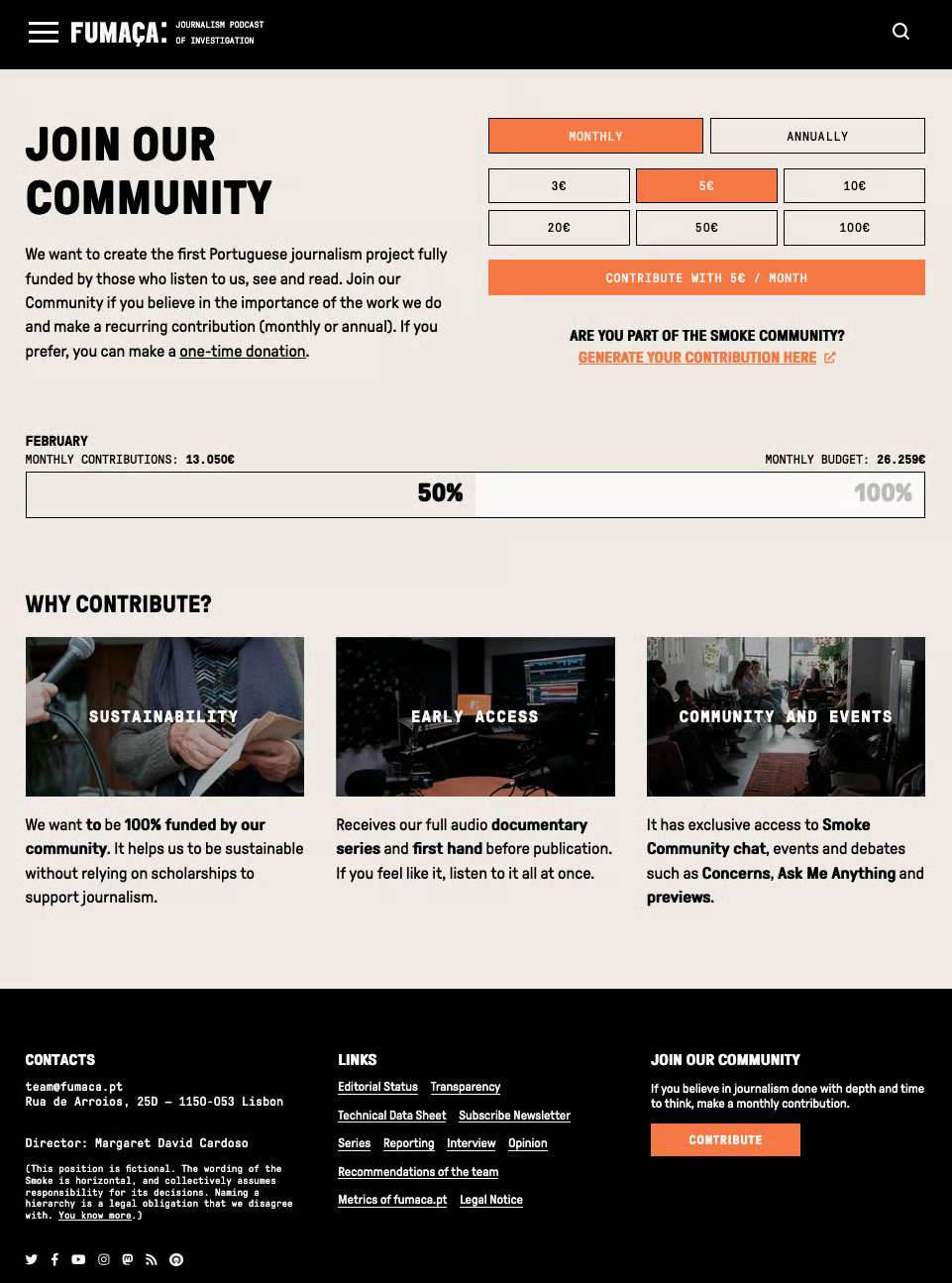
Clicking the “Join now” button leads to the join page, where various payment options and further information about the benefits of membership can be found. The focus is particularly on the outlet’s independence, the ability to access publications early, and the interaction with the community and the team.
[Learn more](https://fumaca.pt/contribuir/)
***
The examples show that there isn’t a single “right” join page, but rather various possibilities—and several strategic decisions you should make consciously:
* **When is the right moment** to capture interested visitors and guide them to the join page?
* **How prominently should the appeal** for support or membership be displayed? Do you want to use pop-ups and banners, or hint at it more subtly through buttons?
* **Which narrative** do you want to put at the center? How can the value of membership be communicated most effectively?
* Do you want to offer **fixed membership** types or a more **flexible suggested contribution**?
* How can you best present your **organization and its mission**—through text or a short video?
* **What questions** might potential members have, and would a FAQ be useful?
Last but not least, there is the question of the **right payment provider**: for example, karla uses Steady, The Bristol Cable and Fumaça rely on beabee, and CORRECTIV works with WordPress and a Stripe integration. Other possible tools include Donorbox, Fundraisingbox, Ghost, or Memberful. Most of these tools can be easily integrated into your join page.
In the end, it’s about finding a solution that fits your outlet, your stage of development, and your community—and presenting it in a way that makes it as easy as possible for interested people to become part of your community.
{% hint style="info" icon="lightbulb" %}
Before you publish your join page, you should definitely **test the user flow**—ideally with people from your target audience. Watch closely how they navigate the page: Where do uncertainties arise? Which content is intuitively understood and which isn’t? At which points are offers overlooked or perceived as intrusive?
It’s important not only to ask for feedback but also to **observe actual behavior**. Often, obstacles appear less in what people say and more in what they do (or don’t do). This way, you can ensure that your join page is clear, persuasive, and user-friendly before it goes live.
{% endhint %}
***
If you don’t want to offer memberships yet and want to start with a simple newsletter sign-up, or if you offer a **newsletter sign-up** alongside your membership, the [next article](/community-journalismus/english/community-centred-methods/how-to-build-a-join-page/embedding-newsletter-sign-ups.md) provides various examples of successful newsletter sign-ups.
***
Get involved:
Ask a question or Make a contribution or Give feedback
---
# Agent Instructions
This documentation is published with GitBook. GitBook is the documentation platform designed so that both humans and AI agents can read, navigate, and reason over technical content effectively. Learn more at gitbook.com.
## Querying This Documentation
If you need additional information that is not directly available in this page, you can query the documentation by asking a question.
Perform an HTTP GET request on the following URL with the `ask` and `goal` query parameters:
```
GET https://wiki.beabee.io/community-journalismus/english/community-centred-methods/how-to-build-a-join-page.md?ask=&goal=
```
`ask` is the immediate question: it should be specific, self-contained, and written in natural language.
`goal` is what the user is ultimately trying to achieve, the reason they need the answer. Sharing it helps GitBook give you a better, more relevant answer. A goal is most helpful when it describes the outcome the user wants rather than restating the question. For example, with `ask=how do I create an API token`, a goal like `automate deployments from our CI pipeline` lets GitBook tailor the answer to that use case.
The response will contain a direct answer to the question and relevant excerpts and sources from the documentation.
Use this mechanism when the answer is not explicitly present in the current page, you need clarification or additional context, or you want to retrieve related documentation sections.